
Pine Nuts (Pignolias)
$22.49
Carousel Images







Pine Nuts (Pignolias)


Delivery Options

Overview

Shelf Life: Store open or closed under refrigeration for up to 1 year. This item can be frozen.

Pieces per pound: Approx 800

Origin: China

Product ID: 3015
Shelf Life: Store open or closed under refrigeration for up to 1 year. This item can be frozen.
Pieces per pound: Approx 800
Origin: China
Product ID: 3015
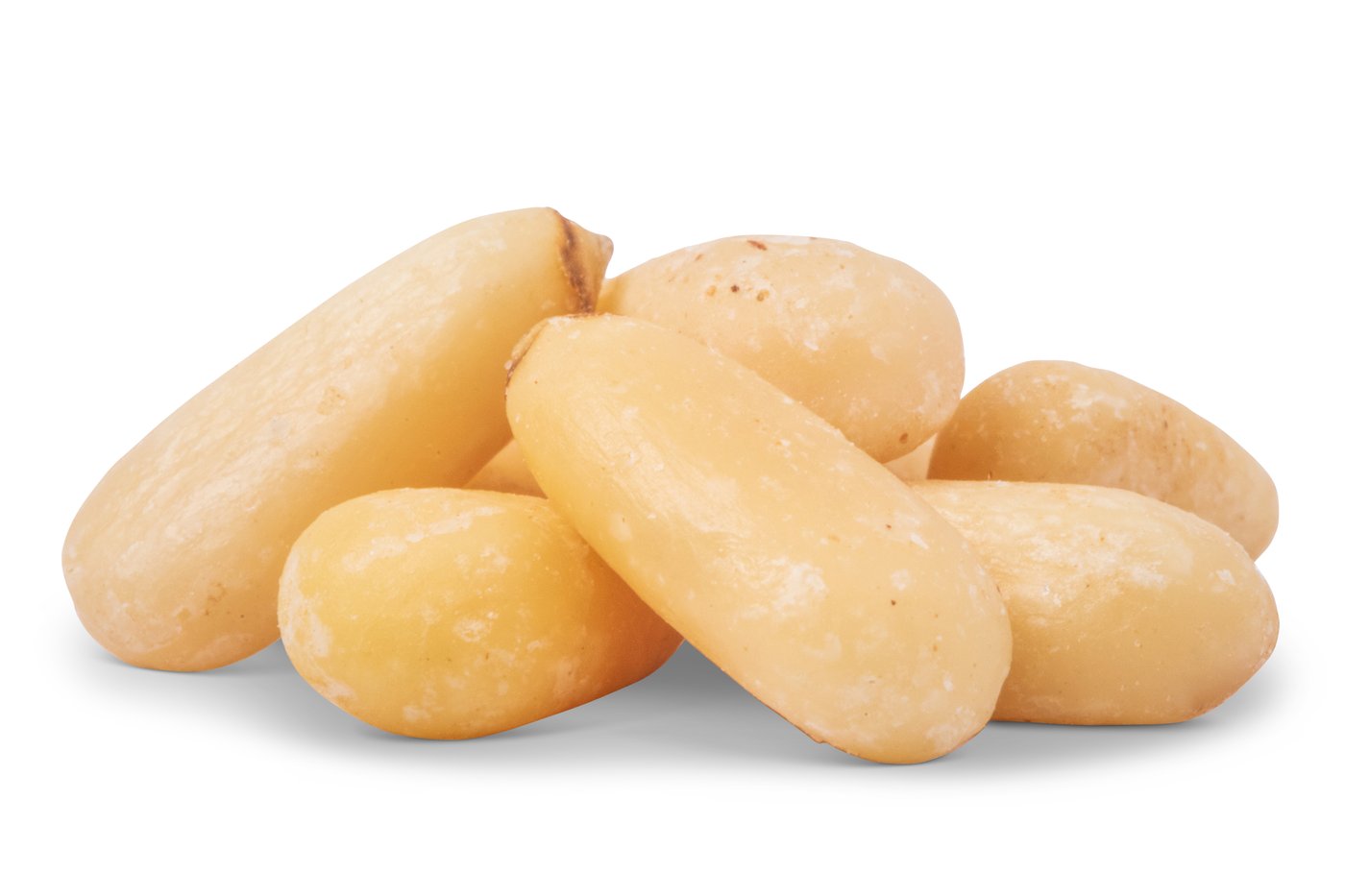
Pine nuts have a delicate sweet and nutty flavor that complements many recipes. Blend these fresh pignolias into a creamy pesto sauce, or add them to cookies and baked goods for a nutty crunch. Roasting the pine nuts will bring out their unique flavor, making them perfect to toss on salads, pastas, and other dishes.
How to Eat Pine Nuts
Pine nuts are delicious as a snack on their own, added to trail mixes, or tossed in baked goods. They also make a crunchy topping for salads and pasta dishes. Try them cooked with vegetables such as spinach for a nutty twist. Pine nuts are also a key ingredient in pesto sauce.
How to Toast Pine Nuts
Pine nuts are commonly toasted to intensify their mild nutty flavor. To toast pine nuts in the oven, bake them on a flat tray at 325 degrees Fahrenheit for 5-10 minutes, stirring them occasionally to ensure they’re evenly toasted and golden brown.
Alternatively, to toast pine nuts in a dry skillet, cook the pine nuts over medium-low heat for only a few minutes, until they are lightly browned and be careful that they don’t burn (small nuts heat up quickly)!
Roasted pine nuts go well with vegetables, on salads, and in pasta dishes. Pesto sauce is usually made with unroasted pine nuts, but roasting the nuts can add a unique and deep nutty flavor.
Pine Nut Nutrition
A one-ounce serving (approx. 160 kernels) of pine nuts provides:
- 4 grams of protein
- 17 percent of the daily value (DV) for magnesium
- 18 percent of the DV for vitamin E
- 12 percent of the DV for vitamin K
- 9 percent of the DV for iron
- A good source of heart-healthy monounsaturated fats
5 Benefits of Pine Nuts
1) Heart Health - Pine nuts are an excellent source of monounsaturated fats, like oleic acid, which promote heart health. Oleic acid is responsible for lowering LDL “bad” cholesterol levels, improving antioxidant activity, and supporting cardiovascular function.
2) Appetite Suppressant - A paper presented in 2006 at the American Chemical Society discussed the impact of pinolenic acid on feelings of hunger. Researchers found that pinolenic acid stimulates the release of hormones that suppress hunger and provide a sense of fullness.
3) Improve Energy Levels - Similar to other varieties of nuts, pine nuts contain nutrients that increase energy levels naturally. They are a good source of protein and magnesium to power you through your day. Low magnesium levels have been associated with fatigue, so munching on pine nuts can help you achieve your daily intake goals for this energy-boosting nutrient.
4) Anti-Aging - Ward off premature aging with a handful of pine nuts a day. These little nuts are packed full of protective antioxidants that combat the damaging effects of free radicals.
5) Eye Health - Lutein is a type of carotenoid that protects eye health by blocking blue light from the sun to prevent damage to structures in the retina. The lutein found in pine nuts may help prevent age-related macular degeneration (AMD), the leading cause of blindness among older adults.
How to Store Pine Nuts
If stored at room temperature, pine nuts should be consumed within a couple weeks. Otherwise, they should be stored under refrigeration and can be kept for up to three months. For long-term storage up to nine months, pine nuts can be transferred to a plastic bag within an airtight container and stored in the freezer. As with many nuts, pine nuts have a high oil content that can make them spoil quickly if not properly stored.
How are pine nuts harvested?
Pine nuts are small, elongated, and edible seeds harvested from the cones of pine trees. When mature pine seeds are ready to be harvested, the cones are collected, dried, and processed to open their scales and remove the pine kernels. The labor-intensive extraction procedure contributes to the high price of pine nuts compared to other nut varieties.
Allergen Information
Contains: Tree Nut.
May Contain: Milk, Soy, Peanut, Sesame
This product is certified Kosher Pareve. Milk may be present. This is not a Kosher matter.
Ingredients:
Pine Nuts. MAY CONTAIN: MILK, SOY, PEANUT, SESAME
Nutrition Facts
Serving size 28g (~1 oz.)
| Amount per serving | ||
|---|---|---|
| Calories | 188 | |
| % Daily Value | ||
Total Fat 19g | 29% | |
Saturated Fat 1g | 7% | |
Sodium 1mg | 0% | |
Total Carbohydrate 4g | 1% | |
Dietary Fiber 1g | 4% | |
Total Sugars 1g | ||
Protein 4g | ||
Iron | 9% | |
The % Daily Value (DV) tells you how much a nutrient in a serving of food contributes to a daily diet. 2,000 calories a day is used for general nutrition advice
Click here to related CA Prop 65 Warning







Customer Reviews
– January 20, 2026
Carmen, Baraga, Michigan
Verified purchaser
I purchased the pine nuts for my Sugar Gliders because they came recommended as a nut they can eat. I did try some to make sure there wasn't any salt on them. They tasted so fresh and nutty. I am well pleased with my total order! Thank you for providing such delicious and nutritions healthy snack alternatives.
Featured Review
Size: 8oz bag
– December 17, 2025
Kevin, NEVADA CITY, California
Verified purchaser
top quality
Size: 8oz bag
Showing 2 of 424 reviews